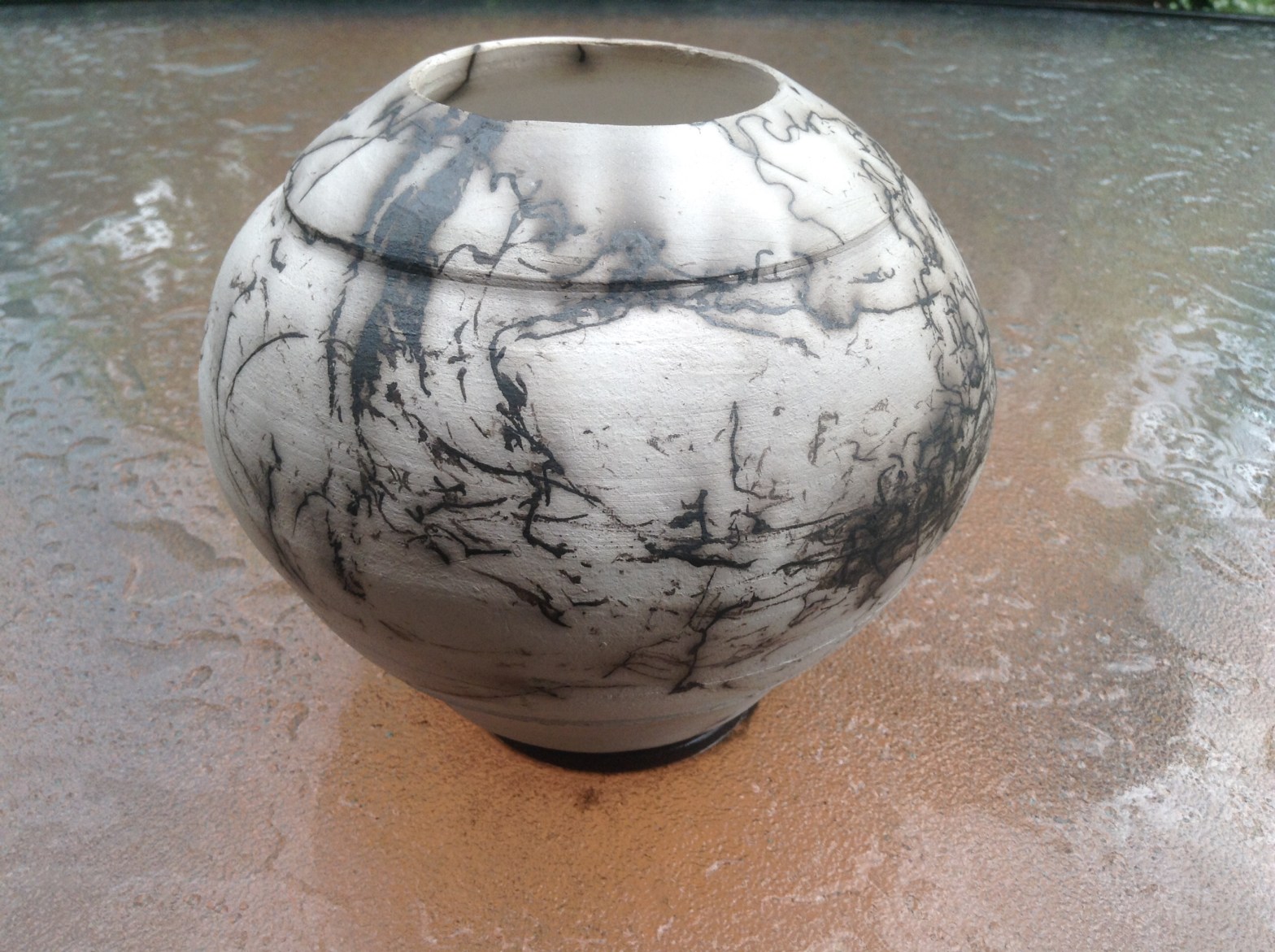
Raku pottery originates from a process used in Japan for hundreds of years. The tea ceremony has, at its heart, precious tea cups and pots that are age old and must be treated with great respect and gentleness. They are pieces of pottery the are not fully changed to stone as firing has been stopped before the conversion to stone has finished at very low firing temperatures.
This process has been remade to another purpose in America. It is usually done outside in open air and there is plenty of smoke! It is a decorative process for pottery – not food safe but purely decorative. Its purpose is to reflect the beauty of heat and flame on pieces of clay. They may or may not survive the harsh shock treatment they will go through. If they do, they will be unique and almost impossible to duplicate.
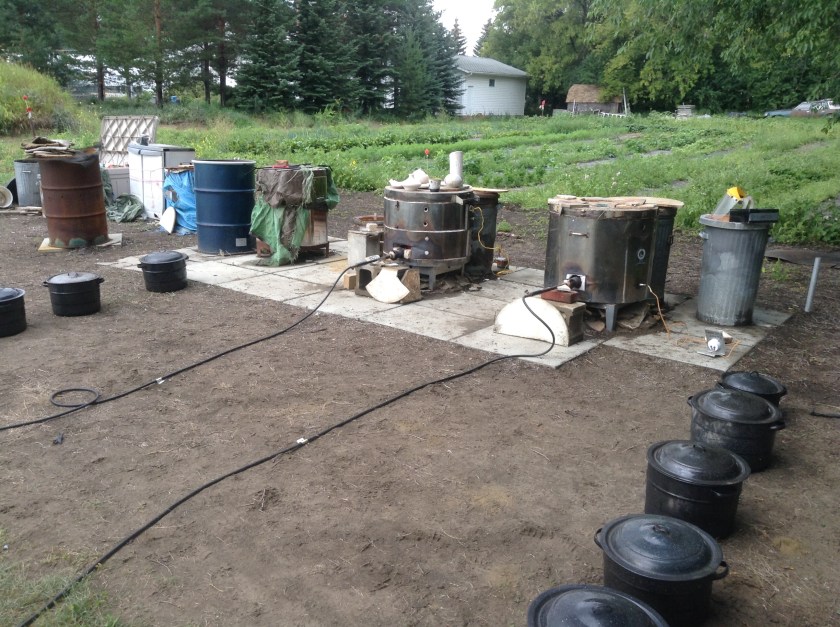
The process involves using a heavy grog clay or a specially created Raku clay to form suitable vessels that can be physically put into a hot kiln, brought up to 1650-1850 degrees F, and then removed with long tongs. Various processes are used, the following two being the most common:
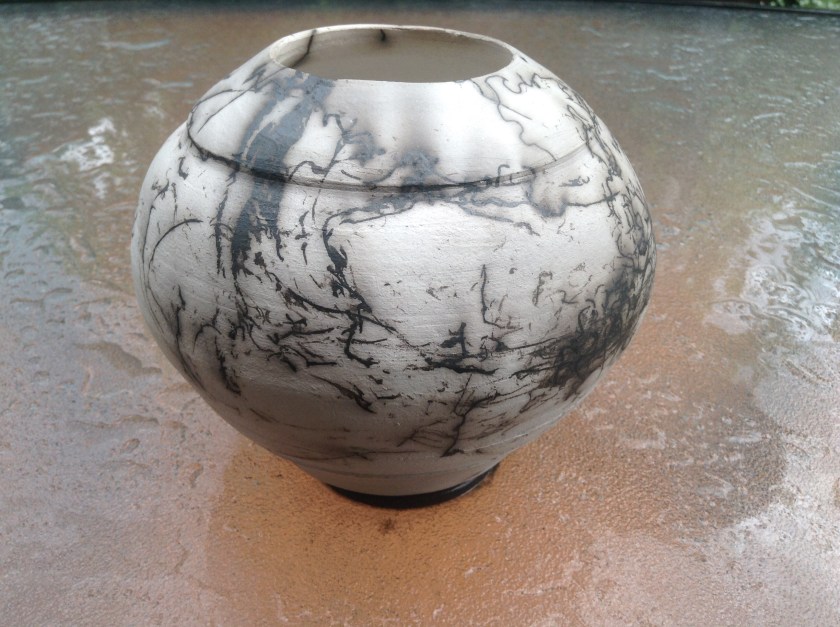
After heating to 1600 F naked unglazed burnished pots may be placed on a flame proof surface and horsehair or feathers are draped over to smoke and melt into the surface.
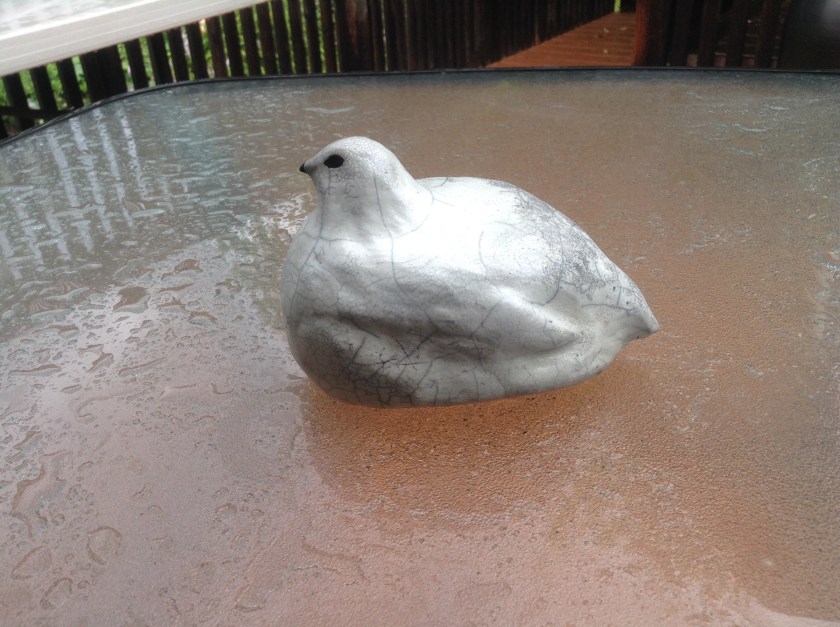
For glazed or partially glazed pieces there are usually combustible materials like leaves or sawdust set up in a large pot or can with a lid near by the kiln, with a wet towel folded in front at the ready. The kiln is closely monitored until it reaches the desired temperature (usually 1800F or so, using a heat visor the potters watch for the glaze to begin to bubble and look like an orange peel). The kiln lid is then removed and protective clothing worn to gingerly remove the orange hot pots from the kiln one by one. They may be swung in cool air to form fine cracks in the glaze and then put into reduction. They may be rushed immediately to the metal pot to prevent oxidation of glaze and to affect certain colour variations. The paper or leaves burst into flame and a wet towel is then thrown over top to encourage the black resultant smoke to cover every unglazed surface or crack.
Results can sometimes be a gamble but Raku artists can fairly consistently draw out certain colours and unique looks.

 Drywood Creek Pottery